


Course Content
Seven focused, hands-on modules
The training is divided into short, interactive modules:
01 Introduction to PAT Testing and Electrical Equipment
This opening module sets the foundation for everything that follows. You'll learn exactly what Portable Appliance Testing (PAT) is, why it matters, and where it fits within an organisation's wider electrical safety regime. We explain the key terminology used throughout the industry so that nothing later in the course feels unfamiliar.
You'll also be introduced to the different categories of electrical equipment you'll encounter as a PAT tester — including portable, movable, hand-held, stationary, fixed and IT equipment — and to the equipment classes (Class I, Class II and Class III) that determine how an appliance is protected against electric shock. Understanding these distinctions early is essential, because the class and type of an appliance dictate which tests are appropriate later on.
02 Electrical Safety, Electrical Dangers and Relevant Legislation
Before you pick up a tester, you need to understand the hazards you're working to control. This module explains how electricity causes harm — covering electric shock, burns and the very real risk of electrical fire — and the conditions that make faulty equipment dangerous.
It then sets out the legal framework that underpins PAT testing in the UK. You'll cover the Health and Safety at Work etc. Act 1974, the Electricity at Work Regulations 1989, the Provision and Use of Work Equipment Regulations 1998 (PUWER) and related duties. Importantly, we clarify a point that's widely misunderstood: while there is no specific law that says "you must PAT test", duty-holders are legally required to keep electrical equipment in a safe condition, and inspection and testing is the recognised way of demonstrating that. You'll come away knowing who carries that responsibility and what "reasonably practicable" really means in practice.
03 Visual Inspections and Equipment Construction
The visual inspection is the single most important part of the PAT process — it identifies the majority of faults before any meters are connected. In this module you'll learn how to carry out a thorough formal visual inspection and how to recognise the signs of damage, wear and misuse that warrant removing an appliance from service.
We go inside the equipment itself, covering correct plug wiring to BS 1363, appropriate fuse ratings, cable and flex condition, strain relief, and the integrity of the casing and connections. You'll also learn how an appliance's construction relates to its equipment class, and the difference between the everyday user checks staff should perform and the formal visual inspection conducted by a competent person.
04 Practical Instruction Using PAT Testing Equipment
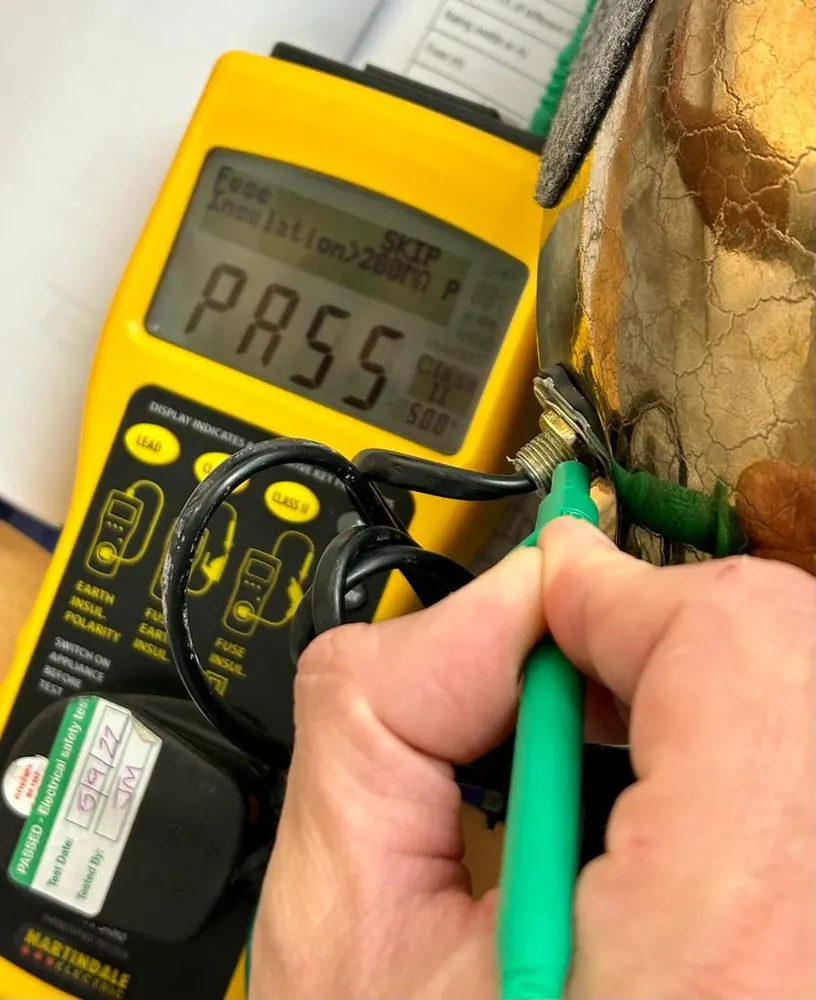
This is where the course becomes truly hands-on. Working with real PAT testing instruments in the learning zone, you'll become comfortable setting up and operating the equipment safely and correctly. We cover the different types of tester you'll meet in the field — from simple pass/fail units to advanced downloadable instruments that store and transfer results.
You'll practise connecting appliances correctly, understand the importance of using calibrated equipment, and build the muscle memory and confidence that only come from repetition. By the end of the module, handling a PAT tester will feel second nature.
05 Inspection and Testing Procedures
Here you'll learn the formal test sequence and how to apply it to different appliances. The module walks through the core electrical tests — including earth continuity testing, insulation resistance testing, lead and polarity checks, and functional checks — and explains the purpose of each one and what it actually proves about an appliance.
Crucially, you'll learn how the correct sequence of tests differs between Class I and Class II equipment, so you always apply the right tests in the right order. We emphasise safe working practice throughout, ensuring that every test you carry out is both meaningful and safe.
06 Interpreting Test Results and Record Keeping
A test is only useful if you can interpret it correctly. This module teaches you how to read your results against acceptable limits, decide whether an appliance has genuinely passed or failed, and act appropriately on a fail. You'll learn correct labelling of tested equipment and how to maintain clear, defensible records.
We also cover how to determine sensible retest intervals. Following the risk-based approach adopted in the current edition of the IET Code of Practice — which moved away from rigid, fixed frequency tables — you'll learn to set inspection and testing frequencies according to the type of equipment, its environment, how often it's used and who uses it. Good record keeping and a well-maintained asset register are presented as the backbone of demonstrating ongoing compliance and due diligence.
07 Legal Requirements, Non-Statutory Requirements and the IET Code
The final module ties everything together and places your new skills firmly within their regulatory context. You'll learn the difference between statutory requirements (the law you must follow) and non-statutory guidance (recognised best practice that helps you comply), and why both matter to a competent PAT tester.
At the heart of this module is the IET Code of Practice for In-Service Inspection and Testing of Electrical Equipment, currently in its 5th edition. We explain what the Code says, how it supports the relevant legislation, and how to use it as your go-to reference. You'll finish the course understanding what "competence" means in this field, how to demonstrate due diligence, and how to carry out PAT testing to a professional, defensible standard.
Learners spend significant time gaining hands-on experience in the learning zone using real testing equipment.